



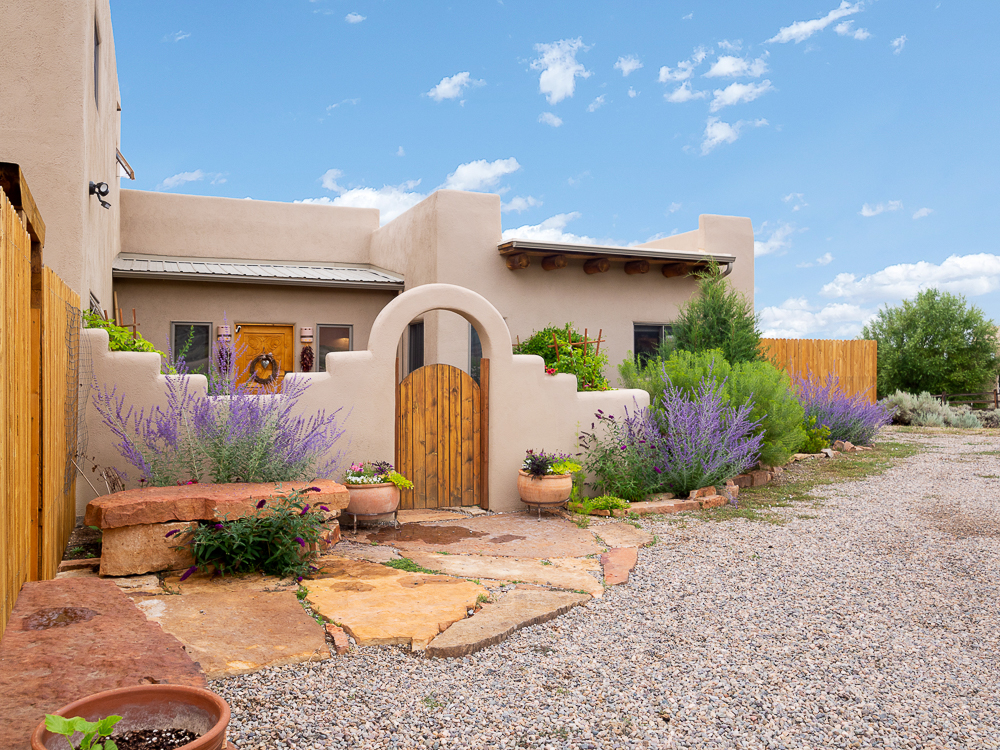
Most buyers who fall in love with a Taos home fall in love with how it looks. The thick walls, the rounded corners, the vigas poking through the stucco, the kiva fireplace in the corner. It's genuinely beautiful architecture.
What's less obvious from the outside is how these homes work, and what to pay attention to when you're buying one. That's what this post is about.
Home Styles — What You're Looking At
Two styles dominate the Taos real estate market.
Pueblo Style is the iconic one. Flat or pocket roofs, rounded corners, stucco exterior, exposed vigas on the outside and decorative wood on the inside, plaster walls, kiva fireplaces, and roof drain canales. These homes can be built from adobe brick, wood frame, pumice block, or straw bale. What they look like on the outside doesn't always tell you what they're made of on the inside, and it matters for maintenance, insurance, and financing. Browse adobe homes for sale in Taos to get a feel for the range.
Territorial Style is a variation. Similar Southwestern character but typically with a pitched metal roof rather than flat. You'll see brick detailing along the roofline in more traditional examples. The pitched roof means less ongoing roof maintenance, which some buyers actively look for.
Many homes blend elements of both. The label on a listing doesn't always match the reality of the construction, so having an inspector who knows this market well is genuinely important.
The Flat Roof Conversation
If you're looking at a Pueblo Style home with a flat roof, this is the conversation worth having before you make an offer.
Flat roofs in Taos work well when they're maintained. The issue is knowing what material you're working with.
Bitumen (sometimes called brai locally) is the older and more common material. It works, but it requires periodic re-coating, roughly every 3 to 4 years, to stay watertight. At 7,000 feet with intense UV and freeze-thaw cycles, that maintenance isn't optional. Skip it and you'll find out quickly.
TPO (thermoplastic polyolefin) is the better modern option. It requires no re-coating, handles UV exposure better, lasts longer, and provides superior protection. If a home has TPO, that's a meaningful advantage. If it has bitumen, factor in the maintenance cost and timing.
Ask the seller for the roof history. When was it last re-coated or replaced? Who did the work? A good inspector familiar with northern New Mexico construction will know exactly what to look for.
Off-Grid and Solar
Taos County has one of the highest concentrations of off-grid properties in New Mexico, and for good reason. The area gets roughly 300 cloudless days per year, making solar genuinely efficient here. South-facing windows and passive solar design aren't just aesthetic choices in Taos, they're practical ones that reduce heating costs significantly.
Full off-grid solar requires a battery storage system to cover nights and cloudy days. It's an upfront investment but eliminates the electric bill entirely for many properties.
Grid-tied solar is the more common middle ground. The home uses solar during the day and draws from the grid at night, banking credits when production exceeds usage. For second home owners who aren't there every day, this tends to be the more practical setup.
For buyers interested in fully off-grid living, they should check out the Greater World Earthship Community west of the Rio Grande Gorge. These structures are designed from the ground up for complete self-sufficiency.
Wells, Septic & Water
Outside the Town of Taos, wells and septic are the norm. We covered the basics in the Where People Live in Taos guide, but a few things are worth adding here specifically for buyers thinking about construction or land.
Well depth varies significantly across Taos County. Some areas have shallow water at 100 to 200 feet, making drilling less costly. Others go 600 to 1,000 feet, which is a very different cost equation. Before buying land or a rural property, it's worth checking the well depth records for surrounding lots. I can pull that information for you through the NM Office of the State Engineer's water rights database if it would help your decision.
Septic systems have a minimum lot size requirement for new installations: 0.75 acres. If you're buying land to build on, that's a hard constraint. Some existing properties with smaller lots have grandfathered systems, but you can't assume that when buying vacant land.
Cisterns in Taos are fed by rainwater and typically used for supplemental purposes like watering plants, fruit trees, and vegetable gardens rather than primary household supply. With only about 10 inches of rainfall per year, they simply can't keep up with full household demand on their own. Earthships are the exception, designed from the ground up to capture and recycle rainwater with remarkable efficiency, though it does require a mindful approach to daily water usage.
Water Rights & Acequias
This is one of the more unique aspects of buying property in New Mexico and worth understanding before you close on anything with irrigation or agricultural potential.
All water in New Mexico is publicly owned. Property owners don't own water, they hold rights to use it. Those rights are administered by the NM Office of the State Engineer, which oversees well permitting, water rights transfers, and interstate water compacts.
Acequias are the traditional community irrigation ditch systems that have been running water through northern New Mexico for centuries. If a property has acequia water rights, those rights are typically tied to the land and transfer to the new owner, often without a separate deed provision. But you can't assume it. Water rights should be explicitly verified and addressed in the purchase agreement.
Acequia rights can have real value, particularly on larger acreage properties where irrigation water is meaningful for agriculture, orchards, or gardens. But they come with real responsibilities too. Acequia membership means participating in the association, contributing to maintenance, and showing up as part of the community that keeps the system running. These ditches don't just water individual properties. They feed the aquifers that serve the entire region, and the water that flows through them has sustained this land and its communities for generations. Absentee owners who have water rights but skip the obligations are a genuine problem for acequia communities, and something worth being honest with yourself about before you buy.
If you're drawn to a property with acequia rights, lean into it. It's one of the more meaningful ways to connect with the history and the land here. Just go in understanding what it asks of you. The Taos Valley Acequia Association is a good resource for understanding how these systems work.
If the water rights situation is complex, a New Mexico real estate attorney familiar with water law is worth the conversation before you close.
The Honest Part
Taos homes are genuinely different from what most buyers are used to. The construction, the maintenance requirements, the water systems, the property rights, all of it has a local character that takes some getting used to. But once you understand it, these homes perform beautifully in this climate and hold a quality of character that newer construction rarely matches.
I've been in this market since 2019 and built my own custom adobe home in Canon Foothills. I know what to look for, what questions to ask, and what surprises to head off before they become expensive. If you're seriously considering a property, reach out before you make an offer.
Call or text anytime at 575-587-3147
Check out this article next